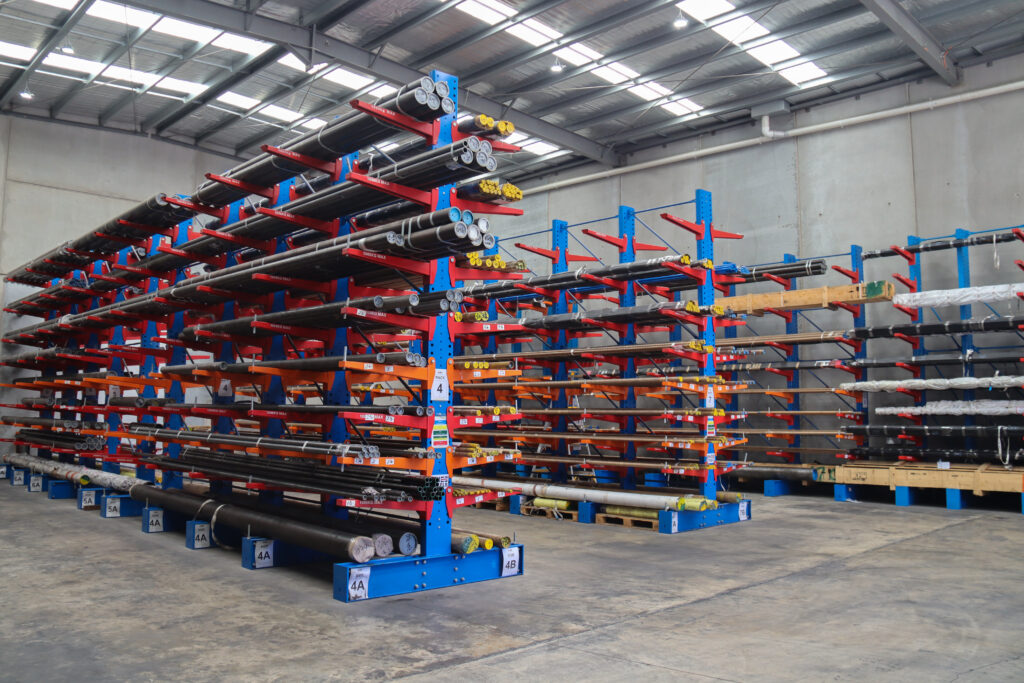
Hydraulic steels are a specialised category of steel used in the manufacture of components for hydraulic systems. These steels are designed to withstand high pressure, repeated movement, and heavy loads without bending, cracking, or wearing prematurely. They are essential in applications where reliability and precision are critical.
What Makes Hydraulic Steels Different?
Hydraulic steels are chosen for their strength, durability, and resistance to wear. Key characteristics include:
- High tensile strength: Can withstand intense pressure and stress.
- Precision tolerance: Manufactured to exact dimensions to ensure smooth operation.
- Corrosion resistance: Protects against rust and environmental damage in demanding applications.
- Surface hardness: Often induction hardened or chrome plated for longevity.
These properties make hydraulic steels the backbone of hydraulic cylinders, pistons, and other critical machinery components.
Common Hydraulic Steel Products
Some of the most commonly used hydraulic steel products include:
- Hydraulic Cylinder Tube: The main body of hydraulic cylinders, carrying fluid pressure and guiding the piston.
- Chrome Bar: Often used as piston rods or shafts, offering hardness and smooth movement.
- Induction Hardened Steel: Ideal for applications requiring extra wear resistance on high-friction components.
Industries That Rely on Hydraulic Steels in Australia
Hydraulic steels are used across multiple industries, supporting machinery and equipment that operate every day. Key sectors include:
- Construction: Excavators, cranes, and other heavy machinery rely on hydraulic cylinders to lift and move heavy loads safely.
- Manufacturing & Fabrication: Presses, automated machinery, and assembly lines require precision hydraulic components to operate efficiently.
- Mining & Resources: Mining equipment faces extreme conditions; hydraulic steels ensure machines can withstand high pressure and abrasive materials.
- Agriculture: Tractors, harvesters, and irrigation systems rely on hydraulic components for smooth and precise operation.
- Transport & Logistics: Forklifts, hydraulic lifts, and warehouse equipment depend on hydraulic steels to handle weight reliably.
Why Quality Matters
Not all hydraulic steels are created equal. Substandard steel can lead to:
- Premature wear and damage
- Downtime and costly repairs
- Safety risks for operators
Using high-quality hydraulic steels ensures long-lasting performance, reduces maintenance, and keeps operations running smoothly.